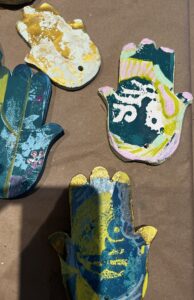
Art can help people stay connected to their roots while still expressing who they are today. This is one reason Jewish art continues to change with every generation. Artists can take ideas connected to family, faith, culture, memory, and tradition and show them in new and personal ways.
Contemporary Jewish Art brings this idea into today’s homes and art collections. It can include familiar Jewish symbols, but it does not have to look traditional. Artists may use abstract shapes, modern colors, textured paint, simple designs, or mixed materials to tell their stories.
For homeowners, this makes Jewish art easier to bring into many types of spaces. A handmade Hamsa can welcome guests near an entryway. An abstract painting can become the main artwork in a living room. A modern Judaica piece can add personal meaning to a bedroom, office, or dining area.
Contemporary Jewish art is not about leaving tradition behind. It is about finding new ways to keep it part of everyday life.
Why Is Contemporary Jewish Art Meaningful in Modern Homes?
A home is more than furniture and decoration. It is also a place where personal memories, family stories, and culture can be seen and shared.
Contemporary Jewish artwork can bring these ideas into the home through:
- Jewish symbols
- Modern colors
- Abstract forms
- Handmade details
- Personal stories
- Cultural themes
- Spiritual meaning
The artwork can be simple or bold. What matters is the connection between the piece and the person who chooses it.
What Is Contemporary Jewish Art?
Contemporary Jewish art is artwork created in today’s world that has a connection to Jewish culture, life, history, identity, or personal experience.
It may include:
- Hamsa art
- Judaica
- Abstract paintings
- Hebrew-inspired designs
- Spiritual artwork
- Handmade wall art
- Mixed-media pieces
There is no single way contemporary Jewish art has to look.
One artist may create bright abstract paintings, while another may prefer simple symbols and soft colors.
How Is Contemporary Jewish Art Different From Traditional Jewish Art?
Traditional Jewish art often uses familiar symbols and styles that have been passed down over time.
Contemporary artists can take those ideas and show them differently.
They may use:
- New colors
- Abstract shapes
- Modern materials
- Heavy texture
- Simple lines
- Mixed-media details
The style may change, but the connection to Jewish culture can remain.
This gives artists freedom to respect tradition while creating something that feels personal and current.
How Does Modern Judaica Art Keep Tradition Fresh?
Modern Judaica Art can take familiar cultural ideas and place them in a style that works with today’s homes.
An artist might use a traditional symbol but change:
- The colors
- The background
- The texture
- The shape
- The overall design
This allows people to keep meaningful symbols in their homes without feeling that their décor needs to follow a traditional style.
Why Is Handmade Hamsa Art Still Popular?
Handmade Hamsa Art continues to be a popular choice because the Hamsa has a simple shape but can carry a lot of meaning.
It is often connected with:
- Protection
- Blessings
- Peace
- Hope
- Positive energy
Artists can give the Hamsa a fresh look through color, texture, and personal design.
This makes it possible for the same symbol to look very different from one artist to another.
What Is the Meaning Behind the Hamsa?
The Hamsa is usually shown as an open hand and has been used in different cultures and traditions for a long time.
It is commonly connected with protection and blessings.
Some people may also connect it with peace, family, strength, or hope.
If you want to understand the symbol in more detail, read The Meaning Behind the Hamsa Symbol.
Knowing its meaning can also make the artwork feel more personal.
Can Hamsa Art Look Modern?
Yes.
Modern Hamsa Art for Contemporary Homes can fit naturally into a modern apartment or house.
Artists may use:
- Simple lines
- Abstract backgrounds
- Neutral colors
- Bright colors
- Metallic details
- Raised texture
A modern Hamsa can keep the meaning of the symbol while looking fresh and current.
Can Contemporary Jewish Art Be Abstract?
Yes.
Jewish artwork does not always need to show a clear symbol.
Abstract art can express feelings and ideas through:
- Color
- Movement
- Shape
- Texture
- Light
- Space
An artist may use abstract forms to explore family, memories, identity, hope, or belonging.
The viewer can then create their own connection with the artwork.
Why Do Abstract Acrylic Paintings Work Well With Jewish Art?
Abstract Acrylic Paintings give artists many ways to work with color and texture.
Acrylic paint can be used for:
- Thick layers
- Soft blending
- Strong colors
- Raised areas
- Brush marks
- Metallic details
This gives artists freedom to express an idea without needing to paint a clear object or scene.
Abstract paintings can also work well beside Judaica because they can share similar colors, textures, or feelings.
Why Are Original Abstract Paintings Good for Modern Homes?
People looking at Original Abstract Paintings for Sale may want artwork that gives a room more personality.
An original abstract painting can add:
- Color
- Movement
- Texture
- Warmth
- A focal point
It can work in a living room, bedroom, office, dining room, or entryway.
You do not need to understand abstract art in one particular way. If the painting makes you feel something and you enjoy looking at it, that personal response matters.
Why Does Handmade Wall Art Feel More Personal?
Handmade Wall Art often has small details that show the artist’s work.
You may notice:
- Brush marks
- Paint layers
- Raised texture
- Small color changes
- Hand-finished areas
These details can make the piece feel different from printed wall décor.
They also give you something new to notice when viewing the artwork up close.
Why Is Artwork Handmade by the Artist Special?
When a piece is Handmade by Artist, it reflects the artist’s own choices from beginning to end.
The artist decides:
- Which colors to use
- Where to add texture
- Which materials work best
- How to balance the design
- When the artwork feels complete
These choices help give each piece its own personality.
This can make original art feel more personal to the person who owns it.
How Does Handmade Spiritual Art Connect With Jewish Art?
Handmade Spiritual Art can share many ideas with contemporary Jewish artwork.
It may explore:
- Hope
- Faith
- Protection
- Peace
- Family
- Reflection
- Gratitude
Some pieces may use clear symbols, while others may use abstract forms.
This gives homeowners many ways to bring meaningful artwork into their spaces.
Can Contemporary Jewish Art Be Part of Spiritual Home Decor?
Yes.
Spiritual Home Decor can include pieces that have personal, cultural, or spiritual meaning.
You might display:
- A Hamsa near the entrance
- An abstract painting in the living room
- Judaica in the dining room
- A peaceful spiritual piece in the bedroom
You do not need to fill every wall.
A few meaningful pieces can be enough to give the home a personal feeling.
How Does Artist-Designed Home Decor Add Personality?
Artist Designed Home Decor can help make a home feel less like a showroom.
Instead of choosing everything because it matches perfectly, you can add artwork that reflects your own interests and story.
Artist-created pieces may bring:
- Original colors
- Texture
- Handmade details
- Meaning
- A personal story
These small differences can make a room feel more natural and lived in.
How Is Original Israeli Art Connected to Contemporary Jewish Art?
Original Israeli Art can include many ideas connected to culture, identity, memory, family, spirituality, and everyday life.
Some Israeli artwork may use Jewish symbols clearly. Other work may be completely abstract.
There is no single style that represents Israeli art.
This variety can make it interesting for people who want to explore different ways culture and personal experience can appear in art.
How Can an Israeli Artist in NYC Bring Different Ideas Together?
An Israeli Artist NYC may be influenced by both Israeli heritage and life in New York.
These different experiences can shape:
- Colors
- Themes
- Materials
- Style
- Personal stories
New York brings together people and cultures from around the world, while an artist’s Israeli background may provide another set of memories and influences.
The mix can lead to artwork that feels personal while still speaking to people from different places.
Where Can Contemporary Jewish Art Be Displayed?
Contemporary Jewish art can work in many areas of the home.
You can display it in:
- Living rooms
- Entryways
- Dining rooms
- Bedrooms
- Offices
- Hallways
Think about the size and meaning of the piece.
A Hamsa may feel natural near an entrance, while a large abstract painting may work better above a sofa.
How Can Jewish Art Create a Focal Point in a Living Room?
Choose one piece that has enough size or visual interest to attract attention.
You might place it:
- Above a sofa
- Above a console
- Near a fireplace
- On a large open wall
Give the artwork some space.
If too many small decorations are placed around it, the room may feel busy and the main artwork can lose its impact.
Can Contemporary Jewish Art Work in a Minimalist Home?
Yes.
A minimalist room can actually be a great place for meaningful art because the piece has more space to stand out.
You could choose:
- A simple Hamsa
- A textured abstract painting
- A modern Judaica piece
- One large original artwork
You do not need many pieces.
One artwork that you genuinely love can give a simple room plenty of personality.
Does Jewish Artwork Need to Match Your Furniture?
No.
Artwork does not need to match every item in the room.
Instead, look for small connections through:
- Color
- Texture
- Shapes
- Metallic details
- Overall feeling
Contrast can also be beautiful.
A colorful painting may be exactly what a neutral room needs.
How Do You Choose the Right Size of Jewish Artwork?
Start by measuring the wall.
Think about:
- Wall width
- Ceiling height
- Furniture size
- Open space
- Viewing distance
A small artwork can look lost above a large sofa.
A very large piece can feel too heavy in a narrow hallway.
Choosing the right size helps the artwork feel like a natural part of the room.
Is Contemporary Jewish Art a Good Wedding Gift?
Yes.
Art can be a thoughtful gift for a couple beginning their life together.
Wedding Judaica Gifts may represent:
- Love
- Family
- Blessings
- Protection
- New beginnings
A handmade piece can also become part of the couple’s first home and stay connected to the memory of their wedding.
Is Jewish Art a Good Housewarming Gift?
Yes.
Jewish Housewarming Gifts can help celebrate the beginning of life in a new home.
A Hamsa, modern Judaica piece, or other original artwork may express wishes for:
- Happiness
- Peace
- Protection
- Family
- Good memories
If you do not know the person’s wall space, choose a smaller or medium-sized piece that is easy to display.
Why Are Handmade Judaica Gifts Good for Special Occasions?
Handmade Judaica Gifts can feel more personal because they combine culture, art, and the work of an artist.
They can be given for:
- Weddings
- Housewarmings
- Anniversaries
- Birthdays
- Jewish holidays
- Family celebrations
The piece can remain in the person’s home after the celebration is over, keeping the memory of the occasion alive.
Can Contemporary Jewish Artwork Be Personalized?
Depending on the artist, custom details may be possible.
These might include:
- Names
- Dates
- Hebrew lettering
- Favorite colors
- Different sizes
- Family details
Personalization can make artwork especially meaningful for weddings, anniversaries, and new homes.
What Should You Look for When Buying Contemporary Jewish Art Online?
Take time to check the details.
Look for:
- Artist information
- Exact size
- Materials
- Photos
- Close-up images
- Handmade details
- Shipping information
If the artwork is described as original, look for clear information about how it was made.
Always measure your wall before ordering a larger piece.
How Can You Tell if Jewish Artwork Is Handmade?
Look for information about the artist and how the piece was created.
Handmade artwork may show:
- Brush strokes
- Raised paint
- Layered surfaces
- Small natural differences
- Hand-painted details
- Artist signature
Close-up photos can help you see these details when shopping online.
Is Contemporary Jewish Art Worth Collecting?
It can be worth collecting when the artwork has personal meaning and you enjoy living with it.
You do not need to begin with a large collection.
Start with one piece that you really like.
Over time, you may discover that you prefer certain:
- Artists
- Colors
- Symbols
- Materials
- Styles
A collection built slowly can tell a much more personal story.
Can Contemporary Jewish Art Become a Family Keepsake?
Yes.
Artwork can become connected to family memories over time.
A piece may have been bought for:
- A wedding
- A new home
- An anniversary
- A family celebration
- A meaningful personal moment
Years later, the artwork may remind the family of that time.
This can give the piece a personal value that goes beyond its appearance.
How Should Contemporary Jewish Art Be Cared For?
Care depends on the materials used, but some simple steps can help.
Try to:
- Avoid strong direct sunlight for long periods.
- Keep artwork away from very damp areas.
- Dust gently.
- Avoid strong cleaning products.
- Use secure hanging hardware.
- Handle textured surfaces carefully.
Follow any special care instructions provided by the artist.
Why Should You Bring Contemporary Jewish Art Into Your Home?
Contemporary Jewish Art can bring together tradition, modern design, personal stories, and handmade creativity.
A Hamsa can represent protection and blessings. An abstract painting can express feelings through color and texture. Modern Judaica can keep cultural ideas present in a fresh way. Original Israeli art can bring personal experiences and heritage into the home.
There is no rule saying Jewish art must look a certain way.
That is part of what makes contemporary art interesting.
Choose pieces that connect with you. Think about their meaning, colors, size, texture, and story. Do not worry about matching every piece of furniture or following every design trend.
When art feels personal, it becomes more than something hanging on a wall. It becomes part of the home and the people living there.
What Are Some Common Questions About Contemporary Jewish Art?
What is contemporary Jewish art?
Contemporary Jewish art is artwork created today that may explore Jewish culture, identity, family, faith, memories, symbols, or personal experiences through modern styles.
Does contemporary Jewish art always use religious symbols?
No. Some pieces use Hamsas, Hebrew-inspired details, or other Jewish symbols, while others may be completely abstract.
Can contemporary Jewish art work in a modern home?
Yes. Modern colors, simple designs, abstract forms, and textured artwork can work naturally with contemporary interiors.
What is a good Jewish artwork for an entryway?
A handmade Hamsa can be a meaningful choice because the symbol is often connected with protection and blessings.
Can contemporary Jewish art be given as a gift?
Yes. It can make a thoughtful gift for weddings, housewarmings, anniversaries, birthdays, holidays, and family celebrations.
Can Jewish artwork be personalized?
Some artists may offer custom names, dates, Hebrew lettering, colors, sizes, or other personal details.
How do I choose contemporary Jewish artwork for my home?
Think about the meaning, size, colors, style, and where you plan to display it. Choose a piece that you personally enjoy rather than one that simply matches your furniture.
Is contemporary Jewish art only for Jewish homes?
No. Anyone who connects with the artwork, its story, design, or meaning can enjoy contemporary Jewish art.