New York is full of art, but galleries and museums only show part of the story. An artist’s studio gives you a closer look at where ideas actually turn into finished artwork.
An Artist Studio NYC can be a creative space filled with paintings, brushes, colors, unfinished work, materials, sketches, and pieces waiting for their final details. It can also help you understand the person behind the art and the process used to create each piece.
For someone interested in original art, handmade Judaica, Hamsa designs, abstract paintings, or meaningful home decor, learning about the studio process can make the artwork feel more personal.
Instead of seeing only a finished piece, you begin to understand how it was made.
That story can become an important part of choosing art for your own home.
Why Does an Artist Studio in NYC Give You a Different View of the Art?
Finished artwork can look simple when you see it hanging on a wall, but the process behind it may involve many steps.
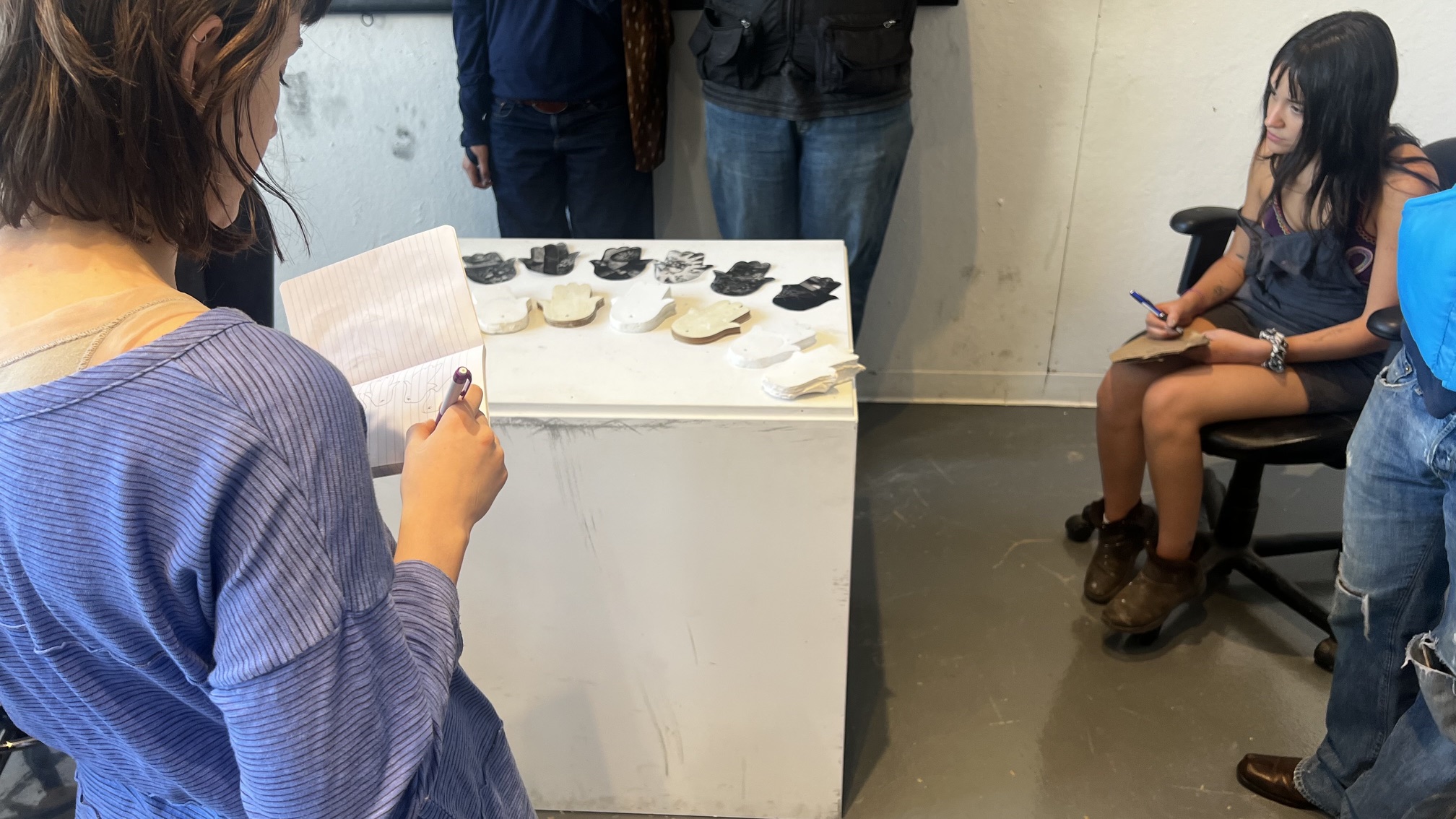
Inside a studio, you may see:
- Works in progress
- Paints and brushes
- Different materials
- Color tests
- Textured surfaces
- Unfinished pieces
- Completed artwork
This can show how much thought and hands-on work goes into each creation.
You may also notice that an artist works on several pieces at the same time, allowing ideas, colors, and techniques to move naturally from one artwork to another.
What Does an Artist Actually Do Inside a Studio?
An artist’s studio is more than a place to paint.
It can be where the artist:
- Develops new ideas
- Experiments with colors
- Tests materials
- Adds texture
- Works on custom pieces
- Finishes artwork
- Plans future collections
Some days may involve creating a new piece from the beginning. Other days may be spent adding small details to work that has already taken days or weeks.
The studio is where much of the thinking behind the finished artwork happens.
Why Is New York an Interesting Place for an Artist to Work?
New York offers inspiration almost everywhere.
An artist may be influenced by:
- Architecture
- Neighborhoods
- People
- Fashion
- Galleries
- Street art
- Cultural communities
- Everyday city movement
Not every painting will show New York directly.
Sometimes the city appears through color, energy, shapes, texture, or the way different ideas are combined.
How Can an Israeli Artist Be Influenced by New York?
An Israeli Artist NYC may bring together experiences from Israeli culture and everyday life in New York.
The artwork may explore:
- Identity
- Family
- Culture
- Memory
- Spirituality
- Belonging
Israeli heritage can provide one source of ideas, while New York adds another.
The finished artwork can reflect both without needing to fit into only one style.
Can an Artist’s Cultural Background Shape the Studio Work?
Yes.
Artists often create from their own experiences.
Family memories, traditions, places, celebrations, and personal beliefs can all influence creative choices.
These influences may appear clearly through symbols, or they may be much more subtle.
For example, an artist may use certain:
- Colors
- Shapes
- Materials
- Textures
- Symbols
because they connect with personal memories or cultural experiences.
Can You Find Modern Judaica in an Artist Studio?
Yes.
Modern Judaica Art can be created through the same artistic process as other original artwork.
A contemporary Judaica piece might include:
- Hamsa symbols
- Abstract forms
- Modern colors
- Layered surfaces
- Metallic details
- Mixed materials
The artist can begin with a familiar cultural idea and then interpret it in a personal way.
This is how traditional meaning can work naturally with modern design.
Why Does Modern Judaica Look Different From Traditional Judaica?
Artists do not have to repeat older designs exactly.
They can keep the meaning while changing the visual style.
A traditional symbol might be shown through:
- Abstract painting
- Minimalist design
- Contemporary colors
- Textured surfaces
- Modern patterns
This gives people more options when choosing Judaica for contemporary homes.
Can Contemporary Jewish Art Be Created in an Abstract Style?
Absolutely.
Contemporary Jewish Art does not always need obvious symbols.
An artist can explore ideas connected with Jewish culture through:
- Color
- Texture
- Movement
- Shapes
- Personal memories
This allows viewers to connect with the work in different ways.
One person may focus on the cultural story, while another may simply love the colors and composition.
Why Is Handmade Hamsa Art Interesting to See in a Studio?
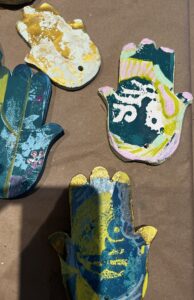
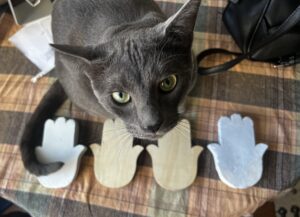
A finished Hamsa may look very polished, but seeing how it is created can show the work behind the piece.
Handmade Hamsa Art may involve:
- Drawing the form
- Choosing colors
- Building texture
- Adding paint layers
- Applying decorative details
- Finishing the surface
The Hamsa is commonly connected with protection, blessings, peace, hope, and positive energy.
An artist can take those familiar ideas and give them a personal visual style.
Can Every Handmade Hamsa Look Different?
Yes.
Even when the artist works with the same symbol, handmade pieces can have individual differences.
Colors may change slightly.
Texture may fall differently.
Brushwork may vary.
Decorative details may be placed by hand.
These small differences are part of what gives handmade art its character.
What Makes Luxury Hamsa Decor Different?
Luxury Hamsa Decor may involve extra attention to materials, texture, finishing, and small details.
A luxury piece may include:
- Rich surface texture
- Metallic accents
- Layered materials
- Detailed handwork
- Carefully finished edges
Luxury does not have to mean overly decorative.
A simple handmade design can feel special when the materials and finishing are carefully chosen.
Can Abstract Acrylic Paintings Be Created in the Same Studio?
Yes.
Many artists work in more than one style.
Abstract Acrylic Paintings can give artists freedom to experiment with color, texture, layers, and movement.
Acrylic paint can be used for:
- Thin color layers
- Bold brushwork
- Raised texture
- Soft blends
- Strong contrasts
An artist may also carry ideas from abstract painting into Judaica and Hamsa designs.
Why Is Texture So Important in Original Art?
Texture gives artwork physical depth.
From across the room, you may notice the overall colors and composition.
When you move closer, you may see:
- Raised paint
- Brush marks
- Layered materials
- Small surface details
- Metallic elements
These details can be difficult to fully understand from a small online photograph.
Seeing original work more closely can reveal much more about how it was made.
Can Abstract Art and Judaica Influence Each Other?
Yes.
An artist does not need to keep different styles completely separate.
Abstract techniques can be used in Judaica.
A Hamsa may appear over an abstract background.
Jewish themes may be expressed through color and texture rather than obvious symbols.
This freedom can make the artist’s work more personal.
Why Does Handmade Wall Art Feel Different From Printed Decor?
Handmade Wall Art often shows the artist’s direct involvement.
You may notice:
- Brushwork
- Paint layers
- Texture
- Hand-applied details
- Small natural differences
A printed image can reproduce a design, but it cannot always reproduce the physical surface of an original handmade piece.
That surface can be an important part of the artwork.
Can Handmade Wall Art Work in a Small NYC Apartment?
Yes.
New York apartments often have limited floor space, which makes wall art especially useful.
You could use:
- One medium artwork above a sofa
- A vertical piece on a narrow wall
- A Hamsa near the entrance
- A smaller painting in the bedroom
You do not need to fill every wall.
A few carefully chosen pieces can make the home feel more personal without making it crowded.
How Do You Choose the Right Art for a Small Home?
Measure the space first.
Consider:
- Wall width
- Wall height
- Nearby furniture
- Viewing distance
- Open space around the artwork
Do not rely only on online room photos.
Always check the actual measurements of the piece before buying.
Can Spiritual Art Be Created Without Using Obvious Religious Symbols?
Yes.
Spiritual Home Decor can express ideas such as:
- Peace
- Hope
- Protection
- Gratitude
- Family
- Reflection
Some pieces may use recognizable symbols.
Others may communicate these feelings through color, texture, and abstract design.
This allows spiritual artwork to work naturally in many different types of homes.
Why Can an Artist Studio Be a Good Place to Understand Spiritual Art?
Knowing the artist’s process can help explain why certain details appear in the artwork.
A color may have personal meaning.
A symbol may connect with family or culture.
A particular texture may have developed through years of experimentation.
Learning about these choices can make the artwork easier to understand.
How Does Handmade Judaica Become a Meaningful Gift?
Handmade Judaica Gifts can carry both the artist’s work and the meaning connected with the piece.
They can be given for:
- Weddings
- Housewarmings
- Anniversaries
- Birthdays
- Holidays
- Family celebrations
A handmade gift can feel more personal because the recipient receives something created by an artist rather than a standard item made in large numbers.
Can Artwork From a Studio Make a Good Wedding Gift?
Yes.
Original art can be especially meaningful when you know the couple’s style.
A Hamsa, Judaica piece, spiritual artwork, or abstract painting may become part of their new home.
Before buying, consider:
- Their favorite colors
- Their home style
- Available wall space
- Whether they prefer modern or traditional art
If you are unsure about size, a smaller or medium piece may be easier for them to display.
Can Original Art Make a Good Housewarming Gift?
Yes.
Moving into a new home often means there are empty walls waiting for something personal.
Handmade art can celebrate the beginning of that new chapter.
A piece may later remind the person:
- When they moved
- Who gave the gift
- Their first years in the home
- Family celebrations
This can give the artwork more personal meaning over time.
How Can Artisan Home Decor Work With Original Artwork?
Artisan Home Decor can help create a home that feels collected rather than mass-produced.
Original wall art can be combined with:
- Handmade objects
- Natural materials
- Textured fabrics
- Simple furniture
- Artist-created decorative pieces
Everything does not need to match.
A home can feel more natural when different pieces have been chosen over time because the owner genuinely likes them.
Does Original Art Need to Match the Furniture?
No.
Artwork should work with the room, but matching every color is not necessary.
Look for a small connection.
The artwork might share:
- One color
- A texture
- A material
- A metallic detail
- An overall mood
Contrast can also be beautiful.
A colorful painting may bring life to a simple neutral room.
Can Artwork From a Studio Become the Main Feature of a Room?
Yes.
A larger original piece can become a strong focal point.
It may work:
- Above a sofa
- Above a console
- On a dining room wall
- In an entryway
- On a large open wall
If the artwork already contains strong colors or texture, keep the surrounding decor simple.
Give the piece enough room to be seen clearly.
How Does Lighting Affect Original Artwork?
Lighting can change the way you see a piece.
Natural daylight may show subtle colors.
Soft evening lighting can make raised texture more visible.
Metallic details may look different depending on the viewing angle.
Avoid prolonged strong direct sunlight on original art.
The right lighting should help you see the artwork without creating harsh glare.
Why Is Buying From an Artist Different From Buying Ordinary Home Decor?
When you buy original work from an artist, you are choosing something connected to a particular creative process.
You may know:
- Who made it
- What inspired it
- Which materials were used
- How it was created
- Why certain details appear
This can create a stronger connection with the artwork.
You are not simply filling an empty wall.
You are bringing part of an artist’s creative work into your home.
How Can You Tell if Artwork Is Really Handmade?
Look at both the artwork and the information provided about it.
Possible signs include:
- Visible brushwork
- Raised texture
- Hand-applied details
- Paint layers
- Natural variations
- Artist signatures
Close-up photographs can be especially useful when buying online.
Information about the artist and creative process can also help.
What Should You Ask Before Buying Original Art?
Consider asking or checking:
- Is this an original piece?
- What materials were used?
- What are the exact dimensions?
- Is the artwork signed?
- How should it be displayed?
- Does it need special care?
- How will it be shipped?
If you are buying for a particular wall, measure the space before ordering.
Should You Buy Original Art as a Financial Investment?
It is better to choose artwork because you genuinely appreciate it rather than assuming it will increase in financial value.
Art can have value because of:
- Originality
- Artist craftsmanship
- Cultural meaning
- Personal connection
- The way it changes a room
Future resale prices are uncertain.
For most people buying artwork for their homes, enjoying the piece is much more important.
Can Artwork Become Part of Your Family Story?
Yes.
Art can become connected with important moments.
You may buy a piece when:
- Moving into a new home
- Getting married
- Visiting New York
- Celebrating an anniversary
- Starting a family
Years later, seeing the artwork can bring those memories back.
This can give the piece a meaning that goes beyond its original design.
How Should You Care for Original Artwork From an Artist Studio?
Care depends on the materials.
In general:
- Avoid prolonged strong direct sunlight.
- Keep artwork away from excessive moisture.
- Dust gently.
- Avoid harsh household cleaners.
- Handle textured surfaces carefully.
- Use secure hanging hardware.
Ask the artist if the piece requires any special care.
Why Is Exploring an Artist Studio in NYC Worthwhile?
An Artist Studio NYC gives you a closer look at the creative work that happens before art reaches a finished wall.
You begin to see the layers, materials, experiments, changes, and decisions behind each piece.
This can be especially interesting when exploring handmade Hamsa art, modern Judaica, abstract paintings, spiritual art, and other original work.
Understanding the process can also help you choose artwork more carefully.
Instead of asking only whether a piece matches your sofa, you can think about the artist, the story, the materials, the meaning, and how the artwork makes you feel.
That can turn an ordinary decorating choice into something much more personal.
What Do People Usually Want to Know About an Artist Studio in NYC?
What would I actually see inside an artist studio in NYC?
It depends on the artist, but you may see finished artwork, works in progress, paints, brushes, materials, sketches, textured surfaces, and pieces being prepared or completed.
Can I learn more about how handmade artwork is created by exploring an artist’s studio?
Yes. A studio can give you a much clearer idea of the materials, layers, texture, and work involved before a piece is finished.
Do NYC artist studios only create paintings?
No. Depending on the artist, a studio may include paintings, handmade Judaica, Hamsa art, mixed-media work, textured pieces, spiritual art, and other artist-created decor.
Can I buy artwork for a small New York apartment?
Yes. You do not need a large wall. A smaller Hamsa, vertical artwork, or medium painting can bring personality to a small apartment without taking up floor space.
How do I know if an original artwork will look good in my home?
Measure your wall, check the artwork’s exact size, and think about its colors and texture. It does not have to perfectly match your furniture; it should simply feel comfortable in the room.
Why should I choose handmade artwork instead of mass-produced wall decor?
Handmade art can show the artist’s brushwork, texture, individual choices, and small natural differences. This can make the piece feel more personal and give your home something that does not look exactly like everyone else’s.