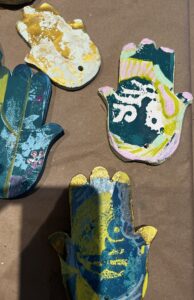
Art has always helped people express identity, memory, culture, and personal experience. Today, collectors and homeowners are increasingly interested in artwork that offers more than visual appeal. They want pieces with a story, a connection to heritage, and an original artistic point of view.
Contemporary Jewish Artwork brings these qualities together. It takes themes connected to Jewish history, spirituality, family, identity, and tradition and explores them through modern artistic techniques. Abstract forms, textured surfaces, bold colors, metallic accents, mixed media, and minimalist compositions can all become part of this creative language.
Its growing appeal is not limited to Jewish collectors. Contemporary Jewish art can communicate universal ideas such as belonging, hope, resilience, protection, love, and memory. This combination of cultural meaning and modern design helps explain why the art is finding an audience in homes and collections around the world.
Why Is Contemporary Jewish Artwork Becoming More Popular Worldwide?
Contemporary Jewish artwork can connect the past with the present without requiring viewers to choose between tradition and modern style.
Its appeal comes from several qualities:
- Cultural meaning
- Original craftsmanship
- Contemporary design
- Personal storytelling
- Spiritual symbolism
- Emotional depth
- Strong visual character
Modern collectors often want artwork that feels individual. They may also want to understand the artist, creative process, and story behind a piece.
Contemporary Jewish art fits naturally into this approach because it can be appreciated visually while also offering deeper cultural context.
What Is Contemporary Jewish Artwork?
Contemporary Jewish artwork is art created in a current artistic context while exploring Jewish themes, symbols, experiences, heritage, or identity.
It can include:
- Abstract paintings
- Judaica
- Hamsa artwork
- Mixed-media pieces
- Spiritual wall art
- Textured acrylic paintings
- Symbolic compositions
- Modern interpretations of Jewish themes
There is no single visual style that defines contemporary Jewish art.
One artist may create minimalist symbolic pieces, while another may use expressive abstraction and heavy texture.
How Is Contemporary Jewish Art Different From Traditional Judaica?
Traditional Judaica often follows familiar forms, symbols, and decorative approaches. Contemporary Jewish art can use those same cultural foundations while interpreting them differently.
Artists may introduce:
- Abstraction
- Minimalism
- Unconventional colors
- Contemporary materials
- Mixed media
- Large-scale compositions
- Experimental texture
Contemporary Jewish Art can therefore preserve cultural meaning while allowing artists greater freedom in how that meaning is expressed.
Why Does Modern Judaica Art Appeal to Younger Collectors?
Modern Judaica Art can be particularly appealing to people who value their heritage but prefer contemporary interiors.
Instead of choosing between cultural meaning and modern design, they can have both.
Modern Judaica may use:
- Clean composition
- Abstract forms
- Neutral palettes
- Bold accent colors
- Metallic details
- Textured surfaces
This makes it easier to display Judaica alongside modern furniture, contemporary architecture, and minimalist décor.
How Does Modern Judaica Art Blend Tradition With Contemporary Design?
The guide How Does Modern Judaica Art Blend Tradition With Contemporary Design? explores how artists can reinterpret cultural traditions through a modern visual language.
Themes may remain connected to:
- Faith
- Family
- Heritage
- Protection
- Blessings
- Identity
- Memory
What changes is how those ideas are visually presented.
A traditional symbol can become part of an abstract composition, while meaningful cultural references can appear through color, shape, texture, or subtle details.
Why Is Original Israeli Art Important to Contemporary Jewish Art?
Original Israeli Art can offer a distinctive perspective shaped by culture, personal experience, place, and artistic identity.
Israeli artists may explore:
- Heritage
- Memory
- Spirituality
- Family
- Belonging
- Cultural change
- Resilience
- Hope
Not every Israeli artist works with religious themes, and Israeli art cannot be reduced to one style.
That diversity makes it especially interesting to contemporary collectors.
How Can an Israeli Artist in NYC Bring a Global Perspective to Jewish Art?
An Israeli Artist NYC can work at the intersection of different cultures.
Israeli heritage may influence memories, symbols, and identity, while New York provides exposure to an international creative environment.
This combination can influence:
- Color
- Composition
- Materials
- Themes
- Scale
- Artistic experimentation
The resulting artwork may feel deeply personal while still speaking to an international audience.
Why Is Handmade Hamsa Art Popular in Contemporary Jewish Design?
Handmade Hamsa Art demonstrates how a familiar symbol can be continually reinterpreted.
The Hamsa is commonly associated with protection, blessings, peace, and positive energy.
Contemporary artists may use:
- Abstract backgrounds
- Metallic accents
- Layered acrylic
- Textured surfaces
- Hand-painted patterns
- Modern color palettes
Each interpretation can give the symbol a different visual personality.
This allows Hamsa art to work in homes ranging from traditional to highly contemporary.
How Does Spiritual Meaning Increase the Appeal of Jewish Artwork?
Many people want their homes to include objects that represent something personally meaningful.
Jewish artwork may communicate:
- Protection
- Hope
- Gratitude
- Faith
- Family
- Peace
- Belonging
This can make the artwork more than decoration.
A piece may become a daily reminder of a personal value, family tradition, or cultural connection.
Why Is Spiritual Home Decor Becoming More Popular?
Spiritual Home Decor fits a broader interest in creating homes that feel emotionally comfortable and personally meaningful.
People may choose spiritual art for:
- Entryways
- Living rooms
- Bedrooms
- Home offices
- Reflection spaces
The artwork does not need to be highly traditional.
Abstract forms and subtle symbolism can introduce spiritual meaning while maintaining a contemporary interior style.
Can Contemporary Jewish Artwork Be Abstract?
Absolutely.
Jewish art does not need to use recognizable symbols to communicate cultural or spiritual meaning.
Abstract artwork can express ideas through:
- Color
- Texture
- Movement
- Contrast
- Light
- Shape
- Space
An artist may use abstraction to explore memory, identity, transformation, or emotion without telling the viewer exactly what to see.
This openness can make the artwork personally meaningful to different audiences.
Why Are Abstract Acrylic Paintings Relevant to Contemporary Jewish Art?
Abstract Acrylic Paintings give artists flexibility to experiment with layers, surfaces, and color.
Acrylic can be used for:
- Heavy texture
- Transparent layers
- Bold color
- Palette-knife work
- Mixed media
- Metallic details
These techniques allow artists to communicate emotion without depending entirely on literal imagery.
For collectors, original acrylic work also provides physical texture that cannot be fully reproduced in a flat print.
Why Does Texture Matter in Contemporary Jewish Artwork?
Texture adds a physical dimension to the artwork.
Raised surfaces and layered materials can create:
- Depth
- Movement
- Shadows
- Highlights
- Visual rhythm
As lighting changes, textured art can look slightly different throughout the day.
Texture can also emphasize the handmade nature of a piece, making the artist’s involvement more visible.
How Does Handmade Wall Art Fit Modern Interior Design?
Handmade Wall Art can add originality to modern rooms that might otherwise feel too uniform.
A handmade piece may contain:
- Visible brushwork
- Natural variations
- Layered surfaces
- Mixed-media details
- Hand-finished elements
These qualities create contrast with the smooth surfaces often found in modern architecture and furniture.
One original artwork can add warmth without making the room feel cluttered.
Why Is Modern Judaica Decor Popular in Contemporary Homes?
Modern Judaica Decor makes it possible to integrate cultural identity into everyday interior design.
Rather than keeping Judaica separate from the overall décor, homeowners can select pieces based on:
- Color
- Scale
- Texture
- Materials
- Composition
This helps Judaica feel like a natural part of the room.
How Can Modern Judaica Decor Elevate Your Home Design?
The guide How Can Modern Judaica Decor Elevate Your Home Design? explores how meaningful artwork can become part of a polished interior.
A strong piece can:
- Create a focal point
- Add cultural character
- Introduce texture
- Connect colors
- Add emotional depth
- Make a room more personal
The key is thoughtful placement rather than quantity.
Why Does Authentic Handmade Judaica Appeal to Collectors?
Authentic Handmade Judaica gives collectors a clearer connection to the person who created the work.
Buyers can look for:
- Artist information
- Original design
- Visible craftsmanship
- Material details
- Hand-applied finishes
- Meaningful symbolism
This transparency is increasingly important to people who want to understand where their artwork comes from.
How Can You Tell Whether Contemporary Jewish Artwork Is Authentic?
Start by learning about the artist and artwork.
Look for:
- Artist name
- Materials
- Dimensions
- Creative process
- Signature
- Originality
- Studio information
- Clear photographs
For higher-value pieces, provenance and documentation may also be important.
Authenticity is about more than appearance. It is about understanding who created the work and how it was made.
Why Does Artist-Made Artwork Feel More Valuable?
Artwork created directly by an artist carries evidence of individual decisions.
The artist chooses:
- Colors
- Materials
- Texture
- Composition
- Symbols
- Finishing
These decisions create natural differences that are difficult to reproduce exactly.
For many collectors, this individuality provides greater emotional value than owning a mass-produced decorative piece.
Can Contemporary Jewish Artwork Work in Minimalist Homes?
Yes.
Minimalist spaces can provide an excellent setting for meaningful artwork.
Choose pieces with:
- Clear composition
- Controlled colors
- Strong texture
- Simple symbolism
- Balanced scale
Open wall space gives the artwork room to breathe.
A single statement piece can often provide enough personality for an otherwise simple room.
Does Jewish Artwork Need to Match the Furniture?
No.
Artwork should relate to the room without matching everything exactly.
Look for subtle connections through:
- Color
- Metallic finishes
- Texture
- Shape
- Visual warmth
Some contrast can make the room more interesting.
A bold piece of contemporary Jewish artwork can become the element that gives a neutral room personality.
Where Should Contemporary Jewish Artwork Be Displayed?
Suitable locations include:
- Living rooms
- Entryways
- Dining rooms
- Bedrooms
- Home offices
- Hallways
- Reflection spaces
Consider both the visual style and meaning of the piece.
Symbolic art may feel particularly appropriate near an entrance, while quieter abstract work may suit a bedroom or private space.
Why Is Contemporary Jewish Artwork a Meaningful Gift?
Contemporary Jewish artwork can make a thoughtful gift because it combines art with cultural or spiritual meaning.
It can be suitable for:
- Weddings
- Housewarmings
- Anniversaries
- Birthdays
- Jewish holidays
- Family milestones
Original artwork can remain part of the recipient’s home long after the occasion has passed.
Why Are Handmade Judaica Gifts Suitable for Important Occasions?
Handmade Judaica Gifts can represent more than the celebration itself.
They may communicate wishes for:
- Happiness
- Protection
- Peace
- Family
- Love
- New beginnings
Because they are handmade, they can also offer originality that makes the gift feel more personal.
Can Contemporary Jewish Artwork Be Personalized?
Depending on the artist, customization may include:
- Names
- Dates
- Hebrew lettering
- Preferred colors
- Dimensions
- Family symbols
- Metallic finishes
Personalization can work especially well for weddings, anniversaries, and housewarmings.
The best custom pieces integrate these elements naturally into the overall artwork.
Is Contemporary Jewish Artwork Collectible?
Yes.
Collectors may choose contemporary Jewish artwork for its:
- Originality
- Cultural significance
- Artist identity
- Craftsmanship
- Symbolism
- Emotional connection
Financial appreciation is never guaranteed, but original work can have lasting personal and artistic value.
Collectors should focus first on quality and genuine interest in the artwork.
Can Contemporary Jewish Artwork Become a Family Heirloom?
Yes.
Artwork can become increasingly meaningful as it becomes connected to family experiences.
A piece may eventually represent:
- A wedding
- A first home
- A family tradition
- A loved one
- A cultural connection
- An important milestone
Over time, the story attached to the artwork can become part of its value.
How Is Social Media Helping Jewish Artists Reach Global Audiences?
Digital platforms have made it easier for artists to share their work beyond local galleries and studios.
Collectors can now discover:
- Artist stories
- Studio processes
- New collections
- Work-in-progress images
- Finished artwork
This greater access allows people in different countries to connect directly with artists and artistic traditions they may not otherwise encounter locally.
Why Does Contemporary Jewish Artwork Have Global Appeal?
Although contemporary Jewish artwork may be rooted in a particular cultural experience, many of its themes are universal.
Ideas such as:
- Family
- Memory
- Hope
- Identity
- Protection
- Love
- Belonging
- Resilience
can be understood across cultures.
This helps the artwork connect with people who may appreciate its Jewish context while also responding to its broader human meaning.
How Should Contemporary Jewish Artwork Be Cared For?
Care depends on the materials, but basic practices include:
- Avoid prolonged direct sunlight.
- Protect artwork from excessive moisture.
- Dust gently.
- Avoid harsh cleaning products.
- Use secure hanging hardware.
- Follow the artist’s specific care instructions.
Textured and mixed-media pieces may need additional care.
Why Is Contemporary Jewish Artwork Likely to Remain Relevant?
Contemporary Jewish Artwork is becoming more visible worldwide because it does something important: it allows cultural heritage to continue evolving.
It does not require artists to choose between tradition and contemporary creativity. Jewish symbols can be reinterpreted through abstraction. Cultural memories can become textured paintings. Spiritual themes can appear in modern interiors. Personal experiences can become visual stories understood across cultures.
For collectors and homeowners, this creates artwork that offers more than decoration. It provides originality, craftsmanship, cultural connection, and emotional depth.
As people continue looking for homes and collections that feel more personal and meaningful, contemporary Jewish artwork has a natural place within that movement. Its ability to connect heritage with modern artistic expression gives it an appeal that can reach far beyond any single location or generation.