Art collecting is often about more than finding something attractive for an empty wall. Collectors look for originality, craftsmanship, emotional connection, cultural meaning, and a story that makes a piece worth living with for years.
Original Israeli Art can bring many of these qualities together. It may reflect Jewish heritage, Israeli culture, personal memories, spirituality, identity, and contemporary artistic expression. From abstract paintings and textured surfaces to Judaica and symbolic Hamsa designs, original work gives collectors an opportunity to own art that feels individual rather than mass-produced.
Israeli art can also speak to people far beyond Israel. Themes such as belonging, family, hope, protection, resilience, memory, and transformation are deeply personal yet universal. When these ideas are expressed through an artist’s individual style, they can create artwork with both visual and emotional depth.
Why Do Collectors Value Original Israeli Art?
Collectors may be attracted to Israeli art because it can combine cultural identity with individual creative expression. Original work may draw inspiration from Jewish traditions, Israeli life, family history, spirituality, travel, nature, or the artist’s personal experiences.
Unlike mass-produced décor, an original artwork can contain visible evidence of the artist’s process.
Collectors may notice:
- Original brushwork
- Layered paint
- Textured surfaces
- Individual color choices
- Mixed-media details
- Symbolic elements
- Hand-finished features
- Unique compositions
These qualities give each artwork its own character.
What Makes Original Israeli Art Different From Mass-Produced Décor?
Mass-produced décor is designed to be reproduced consistently. Original art is created through individual artistic decisions.
An artist decides where a color should begin, where texture should be added, which details should remain visible, and when the composition feels complete.
These decisions can make an original piece impossible to reproduce exactly.
For collectors, that individuality matters. They are not simply purchasing an image. They are acquiring a physical work shaped by a specific creative process.
How Does Israeli Culture Influence Original Artwork?
Israeli art can draw inspiration from many sources.
These may include:
- Jewish heritage
- Family traditions
- Mediterranean landscapes
- Jerusalem
- Cultural identity
- Spiritual symbolism
- Migration
- Memory
- Contemporary life
Not every Israeli artist explores the same themes, and there is no single style that defines Israeli art.
That diversity is part of its appeal. One artist may work primarily with abstraction, while another may reinterpret traditional symbols through contemporary materials.
Why Are Original Abstract Paintings Popular With Collectors?
Collectors exploring Original Abstract Paintings for Sale may appreciate how abstraction allows emotion and movement to exist without one fixed interpretation.
Abstract artwork can communicate through:
- Color
- Texture
- Shape
- Movement
- Contrast
- Layers
- Negative space
One person may see calm in a composition while another sees energy or transformation.
That openness can make an abstract painting interesting for years because the viewer’s relationship with it can change over time.
How Do Abstract Acrylic Paintings Create Visual Depth?
Abstract Acrylic Paintings give artists considerable freedom to build layers and surfaces.
Acrylic techniques can include:
- Transparent layers
- Heavy texture
- Palette-knife work
- Visible brushstrokes
- Metallic details
- Mixed-media elements
- Bold blocks of color
Texture is particularly important when viewing original artwork in person.
Light can create shadows across raised surfaces, causing the appearance of the painting to change throughout the day.
Why Does Handmade Hamsa Art Appeal to Art Collectors?
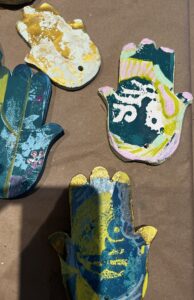
Handmade Hamsa Art combines a recognizable symbol with individual artistic interpretation.
The Hamsa is commonly associated with ideas such as protection, blessings, peace, and positive energy.
An artist can reinterpret the form through:
- Abstract backgrounds
- Metallic accents
- Textured surfaces
- Contemporary colors
- Hand-painted patterns
- Hebrew-inspired elements
- Mixed-media details
Because each interpretation can be different, Hamsa artwork can be collected as both symbolic art and contemporary décor.
How Does Modern Judaica Art Connect Heritage With Contemporary Style?
Modern Judaica Art allows traditional ideas to exist within modern visual language.
Instead of reproducing historic designs exactly, contemporary artists may work with:
- Minimalist composition
- Abstract symbolism
- Modern colors
- Textured acrylics
- Metallic finishes
- Mixed media
- Simplified forms
This approach can appeal to collectors who want a connection to Jewish heritage without limiting their homes to a traditional decorating style.
Why Is Contemporary Jewish Art Relevant to Today’s Collectors?
Contemporary Jewish Art can explore Jewish culture and identity through current artistic approaches.
Themes may include:
- Heritage
- Family
- Faith
- Memory
- Identity
- Belonging
- Hope
- Transformation
Contemporary art allows these ideas to be explored without requiring one specific visual style.
This gives artists freedom to create work that feels culturally meaningful and visually current.
How Can an Israeli Artist in NYC Bring Multiple Influences Into the Work?
An Israeli Artist NYC may create from the perspective of more than one cultural environment.
Israeli heritage can influence symbolism, memories, identity, and personal storytelling, while New York can provide exposure to international art, architecture, fashion, multicultural communities, and contemporary design.
The interaction between these influences can create a distinctive artistic perspective.
Collectors may appreciate artwork that reflects this experience of living and creating between cultures.
Why Does Cultural Storytelling Increase the Appeal of Original Art?
Artwork often becomes more interesting when collectors understand the story behind it.
A painting may be influenced by:
- Childhood memories
- Family experiences
- Cultural traditions
- Personal transformation
- Spiritual beliefs
- Travel
- Places
- Relationships
Knowing this context does not determine how a collector must interpret the artwork.
Instead, it provides another layer of meaning.
The collector can understand the artist’s starting point while developing a personal relationship with the finished work.
Why Is Handmade Wall Art Valuable in a Collection?
Handmade Wall Art can provide physical qualities that reproductions cannot fully capture.
These may include:
- Raised texture
- Visible brushwork
- Layered surfaces
- Hand-applied finishes
- Small natural variations
- Mixed-media elements
These details remind the viewer that the artwork exists as a physical object rather than only an image.
For collectors, this material quality can be an important part of the experience.
How Can Spiritual Home Decor Become Collectible Art?
Spiritual Home Decor can move beyond simple decoration when the piece combines meaningful symbolism with original craftsmanship.
Spiritual art may communicate ideas such as:
- Peace
- Gratitude
- Protection
- Hope
- Reflection
- Family
- Personal growth
Collectors may choose such work because they connect with both its visual style and its underlying meaning.
As the artwork becomes associated with the collector’s own experiences, its emotional significance can grow.
What Makes Luxury Hamsa Decor Attractive to Collectors?
Luxury Hamsa Decor can transform a familiar symbol into a statement artwork.
A luxury piece may use:
- Rich surface texture
- Refined metallic details
- Layered color
- Large-scale composition
- Hand-painted elements
- Sophisticated finishing
The strongest pieces balance decorative impact with craftsmanship and meaning.
Rather than simply filling a wall, they can become a focal point that attracts attention and conversation.
Why Are Handmade Judaica Gifts Sometimes Collected for Generations?
Handmade Judaica Gifts can become especially meaningful when they are connected to an important occasion.
A piece may originally be given for:
- A wedding
- A housewarming
- An anniversary
- A birthday
- A Jewish holiday
- A family milestone
Over time, the story of who gave the artwork and why can become part of its significance.
This emotional history may eventually turn an original Judaica piece into a family keepsake.
Does Original Israeli Art Have to Be Religious?
No.
Israeli art can explore many subjects beyond religious themes.
An artist may focus on:
- Abstract expression
- Nature
- Personal identity
- Family
- Color
- Texture
- Contemporary life
- Cultural memory
- Human emotion
Some artwork may contain clear Jewish symbolism, while other pieces may communicate cultural influence more subtly.
Collectors can therefore find Israeli artwork that suits many different interests and interior styles.
How Can You Tell Whether Israeli Artwork Is Truly Original?
Before purchasing, examine the information provided about the piece.
Consider asking:
- Who created it?
- Is it an original work or reproduction?
- Is the artwork signed?
- Which materials were used?
- What are the exact dimensions?
- Is there documentation?
- Is the creative process explained?
- Are identical versions available?
Visible texture and individual details can also help distinguish original artwork from flat reproductions.
For higher-value purchases, clear provenance and documentation can be especially useful.
Why Does Provenance Matter When Collecting Israeli Art?
Provenance is information about the origin and history of an artwork.
It may include:
- Artist name
- Date of creation
- Title
- Materials
- Dimensions
- Signature
- Purchase records
- Exhibition information
Provenance helps establish where a piece came from.
It can also make it easier for future owners to understand the history of the artwork if it changes hands or remains within a family collection.
Is Original Israeli Art a Good Investment?
Original art can have financial value, but appreciation should never be assumed.
Market value can depend on factors such as:
- Artist reputation
- Demand
- Provenance
- Exhibition history
- Condition
- Rarity
- Collector interest
For many buyers, the strongest reasons to collect original Israeli artwork are personal enjoyment, cultural connection, craftsmanship, and emotional meaning.
Potential financial appreciation should be viewed separately and never treated as guaranteed.
How Should a New Collector Choose an Original Israeli Artwork?
Start with your personal response.
Ask yourself:
- Does the artwork hold my attention?
- Do I connect with its colors?
- Does the symbolism mean something to me?
- Would I enjoy seeing it every day?
- Does the artist’s story interest me?
- Does the scale suit my space?
Do not choose a piece only because you believe it matches current trends.
A collection becomes more personal when it develops around genuine interest.
Can Original Israeli Art Work in Modern Interiors?
Yes.
Original Israeli artwork can work beautifully in contemporary spaces.
Abstract paintings can introduce movement and color. Modern Judaica can add cultural meaning. Textured artwork can provide depth, while symbolic pieces can create a focal point.
Suitable locations include:
- Living rooms
- Entryways
- Dining areas
- Bedrooms
- Home offices
- Hallways
The key is selecting artwork with the right scale and visual weight for the room.
Can Original Israeli Art Work in Minimalist Homes?
Yes.
Minimalist interiors can actually give original artwork more visual impact.
A simple room allows:
- Texture to stand out
- Color to become more noticeable
- Symbolism to remain clear
- The composition to have breathing room
Instead of filling the wall with several decorative items, one carefully selected original piece can provide the personality the room needs.
Why Should Collectors Learn About the Artist Before Buying?
Understanding the artist can deepen your connection to the work.
Learn about:
- Cultural background
- Artistic influences
- Materials
- Techniques
- Recurring themes
- Creative process
This information can help explain why certain symbols, colors, and textures appear repeatedly.
It also allows you to understand how a particular artwork fits within the artist’s broader creative journey.
Can Original Israeli Artwork Become a Family Heirloom?
Yes.
Original artwork may become associated with important personal memories.
A piece might remind a family of:
- A wedding
- A first home
- A meaningful trip
- A loved one
- A cultural connection
- An important celebration
As those stories build around the artwork, its emotional value can become greater than its decorative purpose.
Well-cared-for original art may eventually be passed from one generation to another.
How Should Collectors Care for Original Israeli Artwork?
Care depends on the materials, but several basic practices can help protect original art.
Consider:
- Avoiding prolonged direct sunlight
- Keeping artwork away from excessive moisture
- Dusting gently
- Avoiding harsh cleaning products
- Using secure hanging hardware
- Following the artist’s specific care recommendations
For textured or mixed-media artwork, always check whether special care is required.
Why Is Original Israeli Art Worth Exploring as a Collector?
Original Israeli Art can offer collectors a meaningful combination of cultural identity, craftsmanship, contemporary creativity, and personal storytelling.
An original abstract painting may communicate emotion through color and movement. A handmade Hamsa can reinterpret a meaningful symbol through texture and modern design. Contemporary Judaica can connect heritage with today’s interiors.
The strongest collections are not built simply by following trends. They develop around artwork that continues to create curiosity, emotion, and personal connection.
For collectors seeking pieces with individual character and a deeper story, original Israeli artwork offers an opportunity to bring culture, creativity, and genuine artistic expression into a collection that can remain meaningful for years.